
Choosing between a pellet stove and a traditional wood burner is a key decision for homeowners across Cornwall. While both provide warmth and visual appeal, the realities of Cornish properties, including granite construction, coastal conditions, humidity and evolving clean air regulations, mean the right choice depends on more than appearance alone. Pellet stoves and wood burners differ significantly in how they operate, how they are installed and how they perform in everyday use. Understanding these differences helps ensure your heating system suits both your property and your lifestyle while remaining efficient, compliant and future-ready.
Cornwall’s housing stock includes a high proportion of granite cottages, stone farmhouses and older terraces. These buildings often present challenges for traditional wood burners which rely heavily on internal chimneys and manual airflow control.
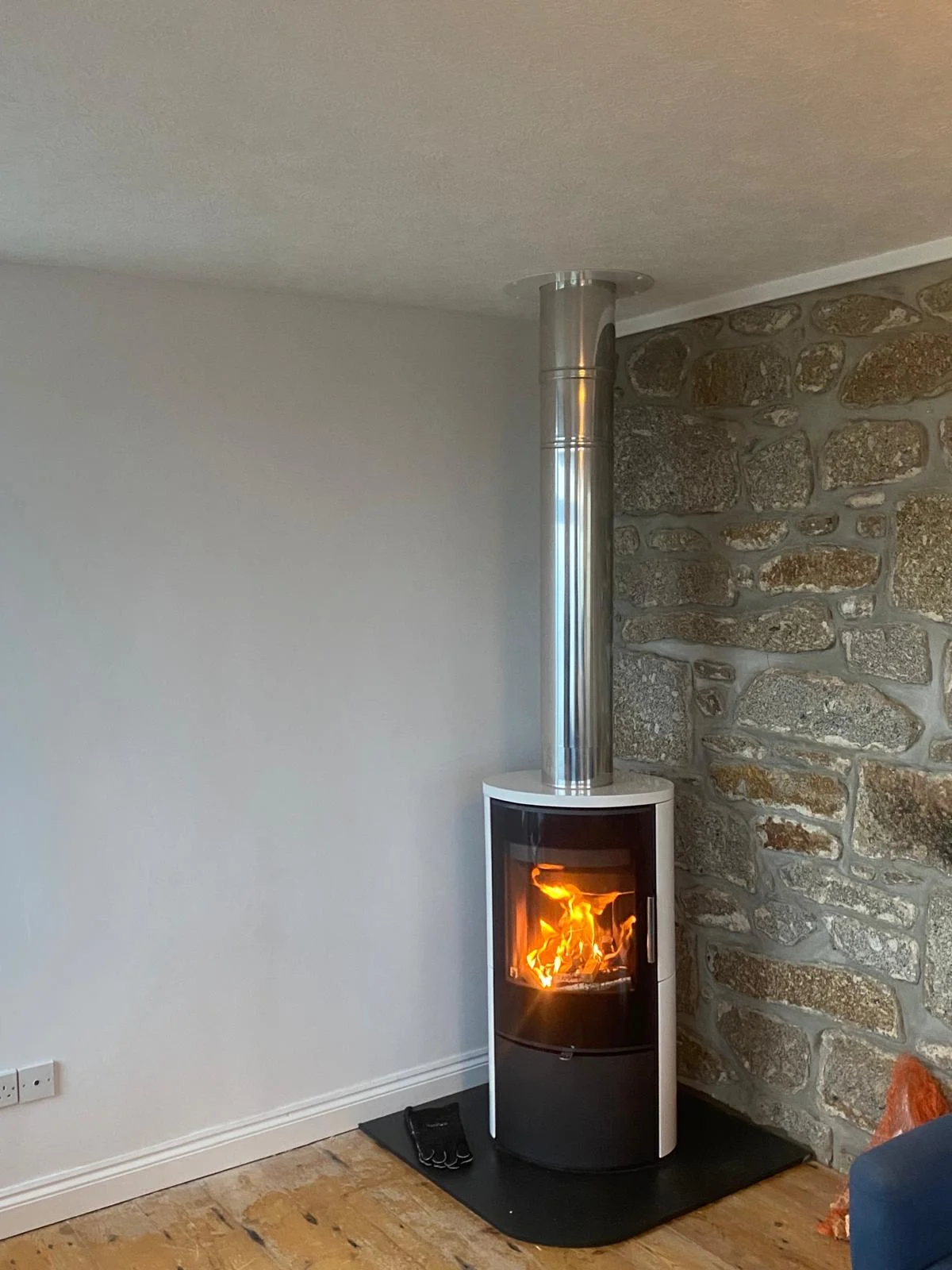
Pellet stoves are more adaptable to granite construction. They use compact flue systems that can be routed externally using twin wall chimneys. This avoids extensive internal building work and preserves original stonework fireplaces and structural features. Precision diamond core drilling allows pellet stove vents to pass through thick granite walls safely and accurately.
Wood burners can still be installed in stone properties but often require chimney relining structural modifications and larger hearth alterations which can increase cost and disruption.
One of the biggest differences between pellet stoves and wood burners is how they are used day to day. Wood burners are entirely manual. They require lighting, regular refuelling airflow adjustments and ash removal.
Pellet stoves are automated heating systems. They ignite automatically feed fuel from a hopper and regulate heat output using thermostats and sensors. Many models offer programmable schedules and Wi-Fi control allowing homeowners to manage heating remotely.
For busy households in Cornwall or properties used as second homes or holiday lets pellet stoves provide reliable heat with minimal effort while wood burners demand more hands-on involvement.
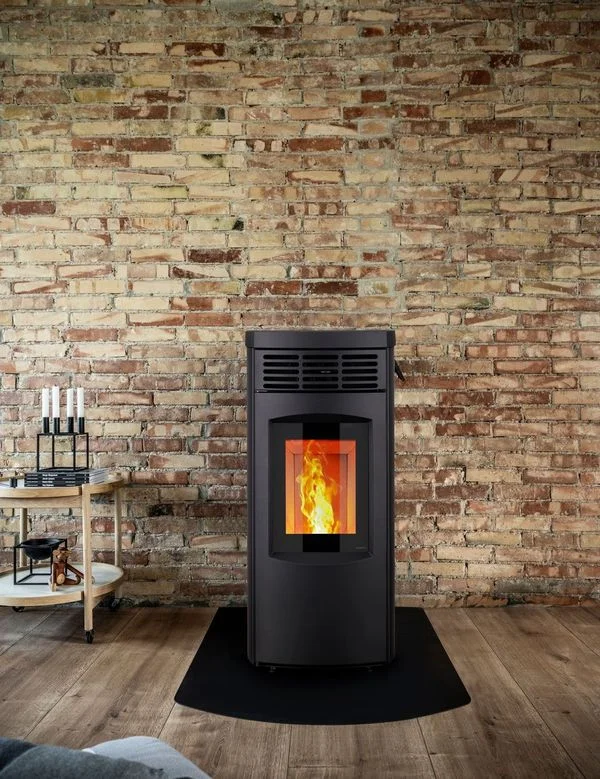
Cornwall’s damp climate has a direct impact on fuel storage. Logs require long-term drying and must be kept well ventilated to maintain efficiency. Poorly seasoned logs lead to excess smoke creosote buildup and reduced heat output.
Pellet stoves use ENplus A1 pellets manufactured to strict standards for moisture content size and ash production. When stored correctly in sealed containers pellets provide consistent clean combustion.
Because pellets are hygroscopic, professional installers advise on suitable storage solutions to prevent moisture absorption which is particularly important in coastal and high-humidity areas such as Bodmin St Ives and Penzance.
All installs by qualified HETAS-registered engineers across Cornwall & Devon.
Fully managed end-to-end project delivery, from survey to final commissioning.
Visit our Redruth showroom, TR16 5FG, by appointment or walk-in.
Free, no-obligation technical site surveys with our HETAS-registered surveyors.
Air quality has become a growing concern across the UK and Cornwall is no exception. Traditional open fires are now widely discouraged and even wood burners are subject to stricter scrutiny.
Modern wood burners that are Ecodesign and Defra exempt perform far better than older models but emissions still occur during lighting refuelling and airflow changes.
Pellet stoves produce significantly lower particulate emissions. Their sealed combustion system keeps the door closed during operation reducing indoor air pollution. Automated fuel delivery ensures consistent burn efficiency and lower smoke output.
For homeowners concerned about indoor air quality and future clean air regulations pellet stoves offer a clear advantage.
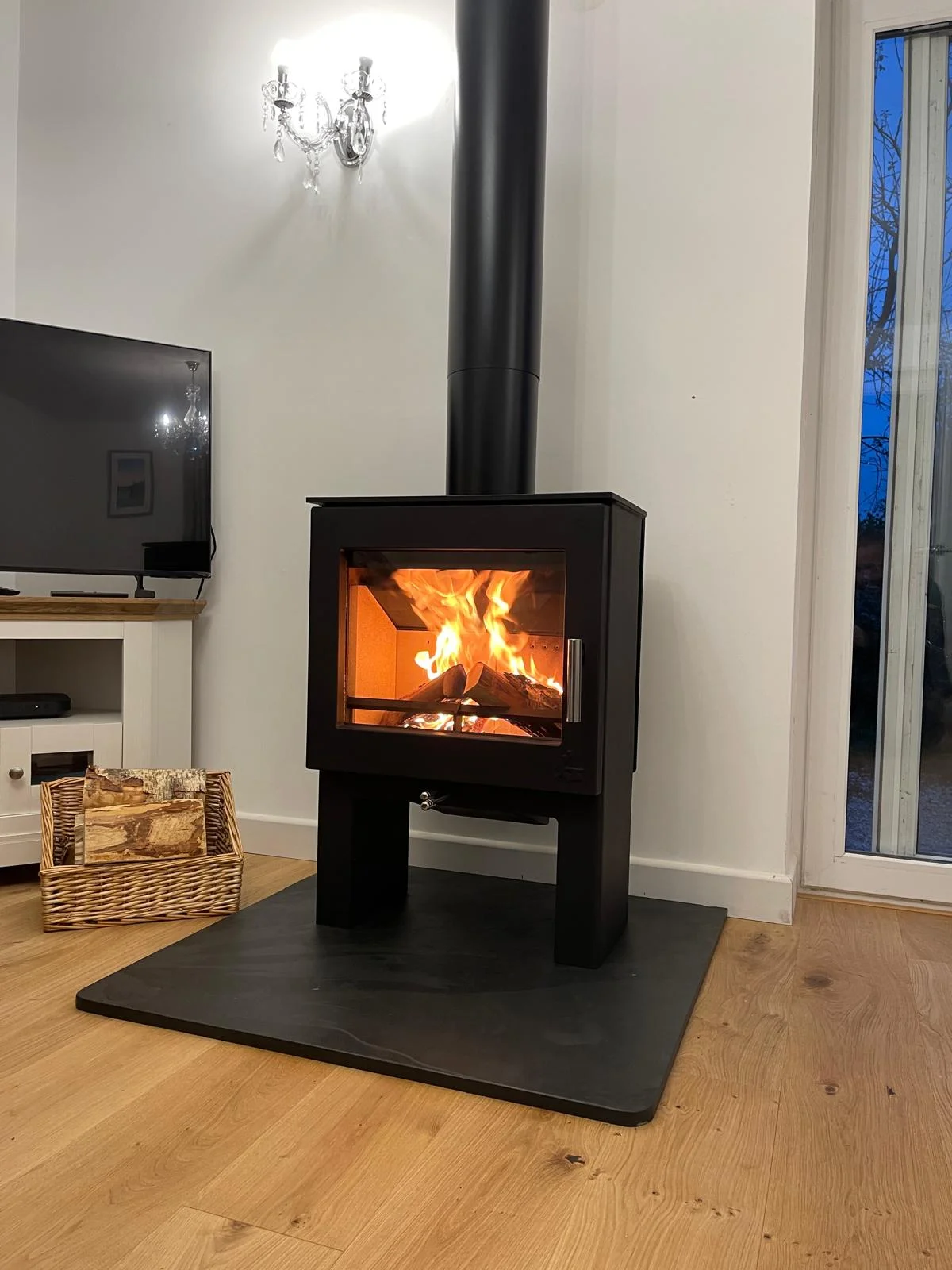
Wood burners typically rely on an existing chimney or require a full flue system routed internally or externally. In many Cornish properties chimneys are blocked redundant or structurally unsuitable.
Pellet stoves offer more flexible installation options. External twin wall flues can be powder-coated black to blend with stone or rendered walls. In coastal locations corrosion-resistant stainless steel grades can be specified to withstand salt-laden air.
This flexibility makes pellet stoves suitable for properties where wood burner installation would be difficult or visually intrusive.
Wood burners are mechanically simple but require regular manual cleaning, chimney sweeping and careful fuel management. Creosote buildup remains a risk particularly when burning damp logs.
Pellet stoves are mechanical systems with sensors, motors and igniters. They require annual servicing to maintain efficiency and reliability. However when professionally installed and maintained pellet stoves offer predictable performance and fewer user-related issues.
Many installers provide servicing schedules and digital records to ensure systems operate safely and efficiently throughout the heating season.
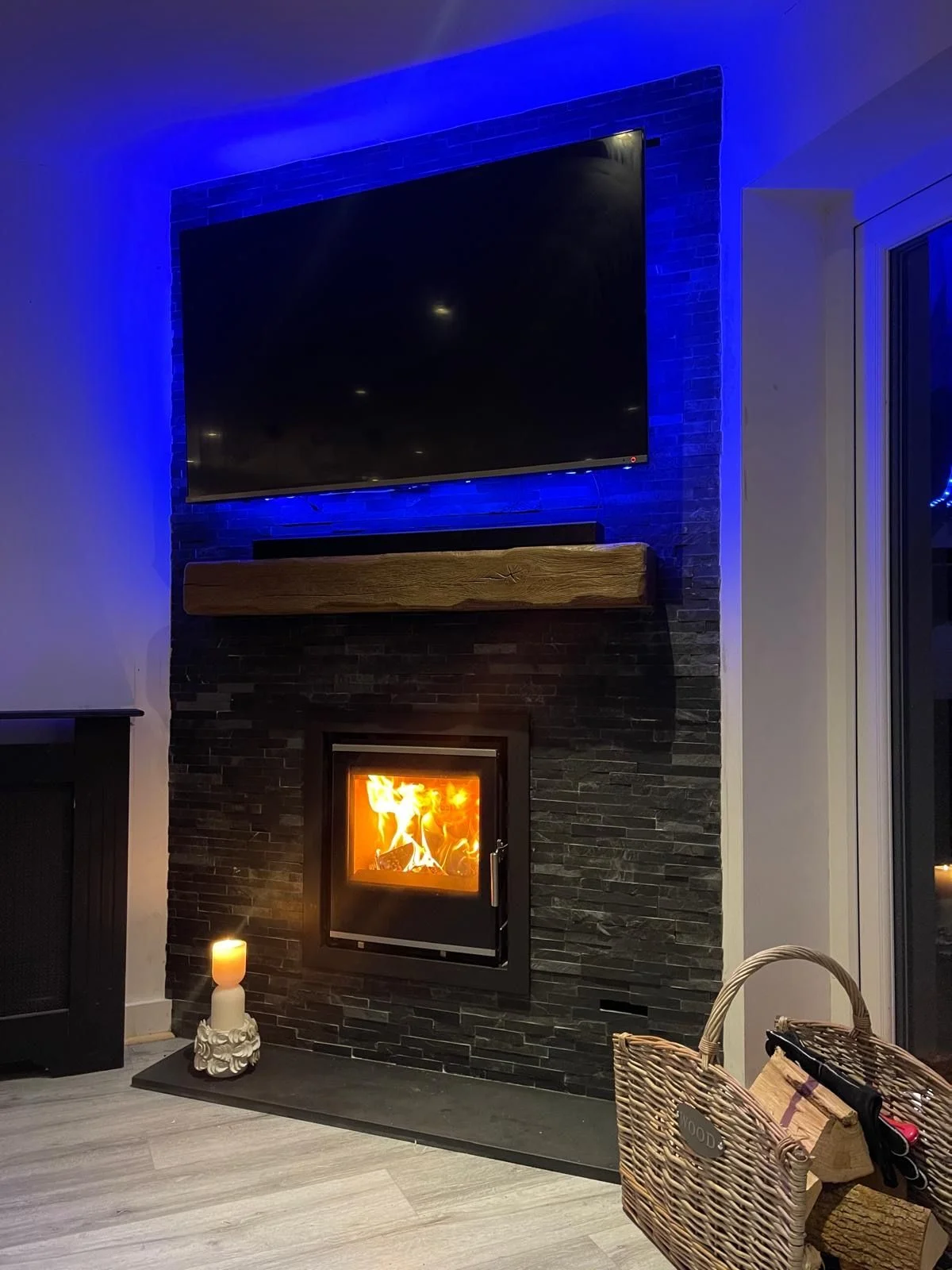
Running costs vary depending on fuel prices, usage patterns and property insulation. Wood burners can be economical when logs are locally sourced and properly seasoned but labour and storage space must be factored in.
Pellet stoves offer controlled fuel consumption with consistent heat output. Their efficiency often results in lower overall fuel usage particularly in well-insulated homes.
Over time pellet stoves can deliver strong value through reduced emissions predictable performance and compatibility with future regulations.
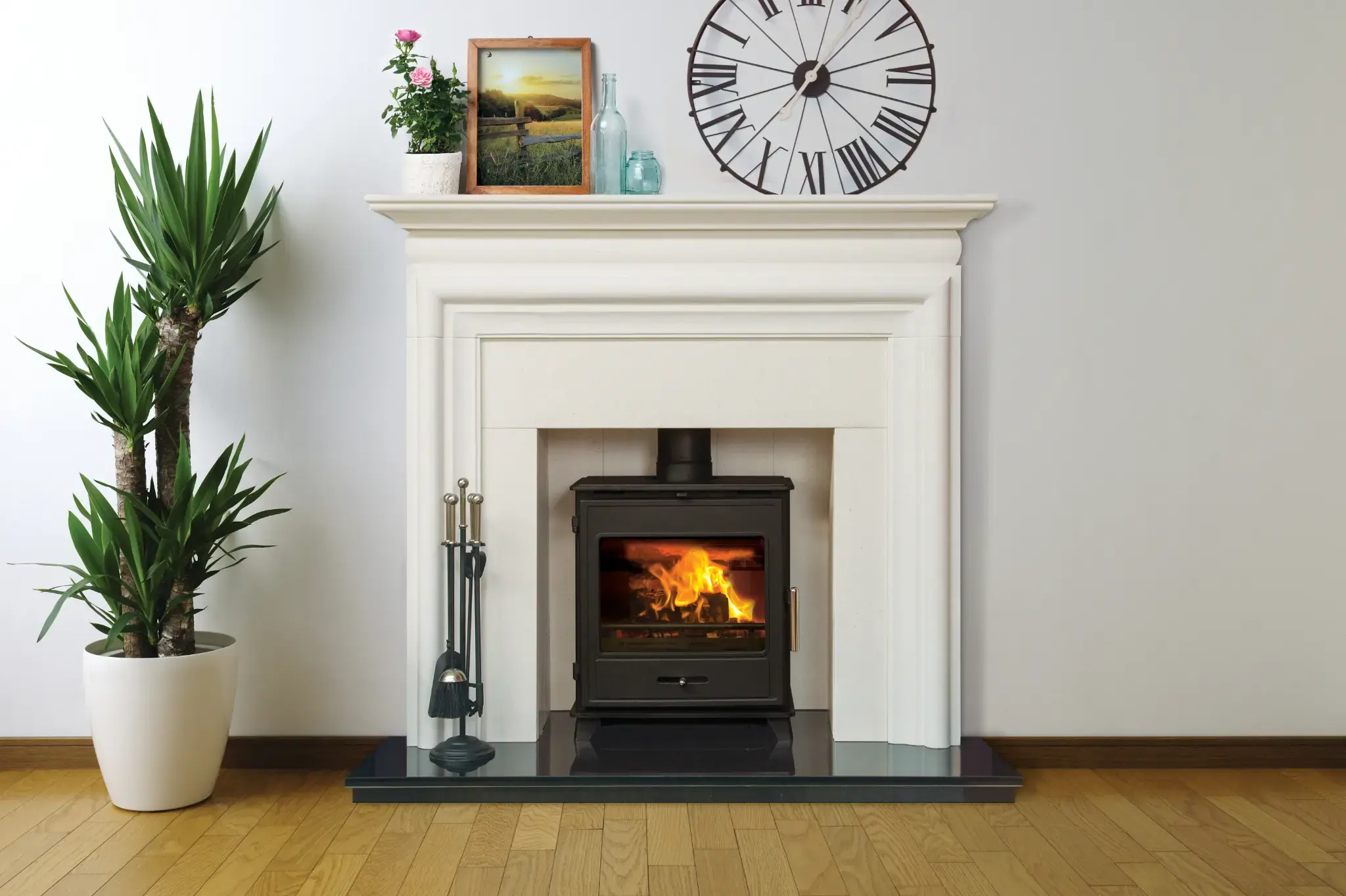
For Cornwall properties the choice between a pellet stove and a wood burner depends on building type lifestyle and long-term priorities. Wood burners suit homeowners who enjoy hands-on operation and traditional aesthetics. Pellet stoves suit those seeking convenience, clean air performance and adaptability to challenging properties.
Understanding these differences ensures your heating choice enhances comfort, protects your home and meets the demands of Cornwall’s unique environment both now and in the future.
Ecodesign and Defra-exempt stoves are not about limiting choice. They are about improving performance, protecting air quality and ensuring heating systems are fit for modern living.
For Cornwall homes these standards provide clarity, confidence and a pathway to efficient clean and responsible heating. Choosing compliant appliances and professional installation allows you to enjoy warmth and comfort while meeting today’s environmental expectations and preparing for tomorrow’s regulations.
Ready to get started? Fill in the form below and we’ll be in touch within 24 hours.