
Listed buildings across Cornwall present unique challenges when it comes to installing fires and heating appliances. Thick granite walls, protected features, strict planning controls and limited chimney options often rule out traditional wood burners and solid fuel systems. However this does not mean period properties must go without the warmth and ambience of a real flame. No chimney fires provide a practical compliant solution for listed buildings allowing homeowners to introduce modern fire features without compromising architectural integrity. With careful product selection and professional advice these systems can deliver comfort while respecting Cornwall’s heritage.
Many listed buildings either lack functional chimneys or have chimneys that cannot be altered. Internal flue lining drilling external walls or modifying fireplaces is often restricted or prohibited by conservation officers.
Granite construction further complicates installation as cutting through stone risks structural damage and loss of original fabric. Even where chimneys exist they may be undersized unsuitable or protected as part of the building’s historic value.
As a result homeowners must seek fire solutions that require minimal or no permanent alterations to the property.
A no chimney fire is designed to operate safely without a traditional flue or chimney stack. These systems do not rely on drawing smoke or gases outside through masonry structures.
Bio-ethanol fires are the most common solution for listed buildings. They use clean-burning fuel and produce real flames without smoke soot or ash. Because no flue is required, installation is far less invasive than solid fuel or gas alternatives.
This makes them particularly suitable for heritage properties where preservation is paramount.
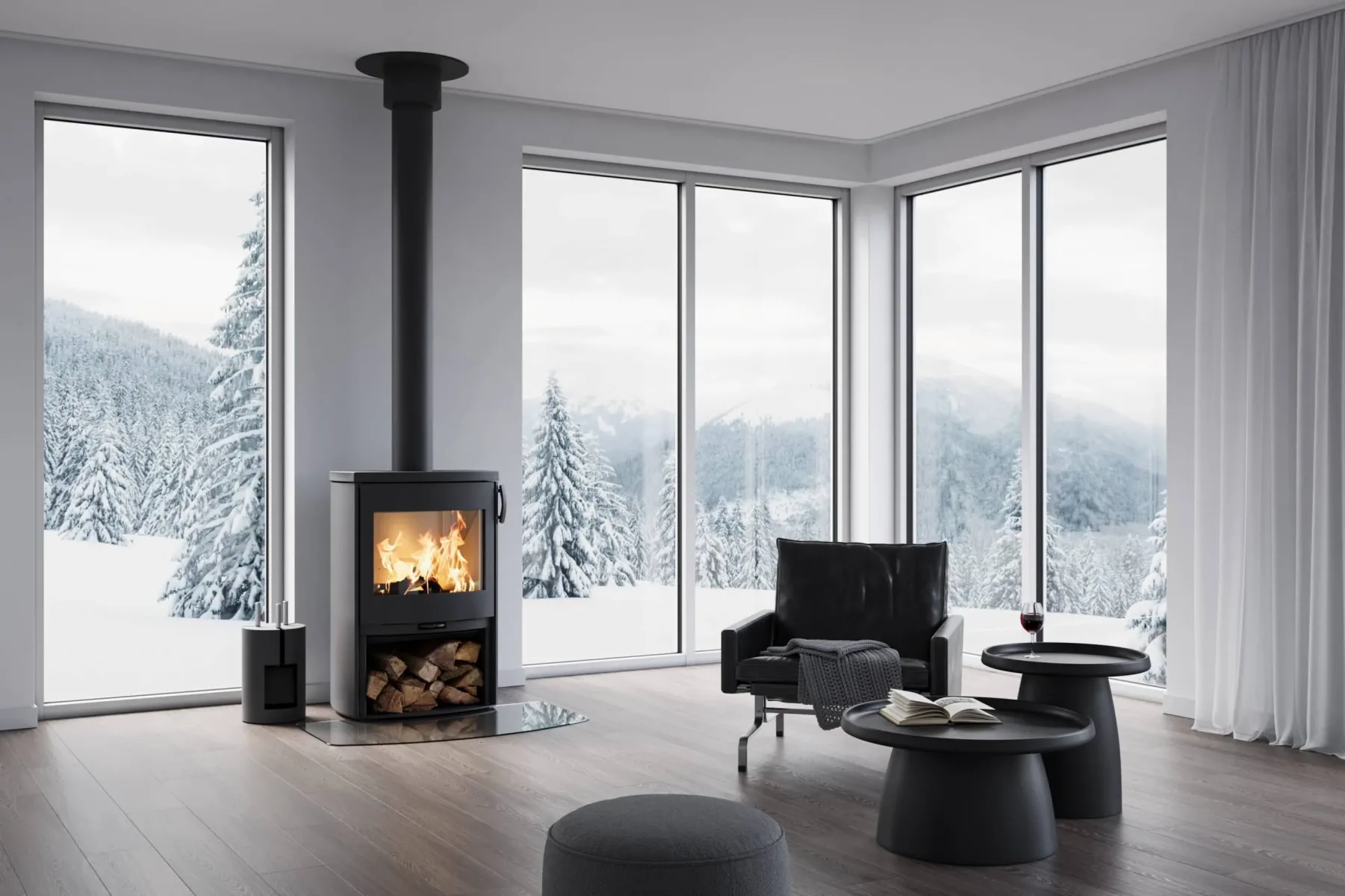
Bio-ethanol fires are often favoured by conservation officers due to their minimal impact on the building fabric. They can be freestanding wall-mounted or inset into existing features without permanent modification.
Because there is no chimney or external pipework, visual impact is minimal. Fires can be installed and removed without leaving lasting alterations which aligns well with listed building requirements.
In Cornwall where many listed homes are located in coastal towns and historic centres this reversibility is a key advantage.
All installs by qualified HETAS-registered engineers across Cornwall & Devon.
Fully managed end-to-end project delivery, from survey to final commissioning.
Visit our Redruth showroom, TR16 5FG, by appointment or walk-in.
Free, no-obligation technical site surveys with our HETAS-registered surveyors.
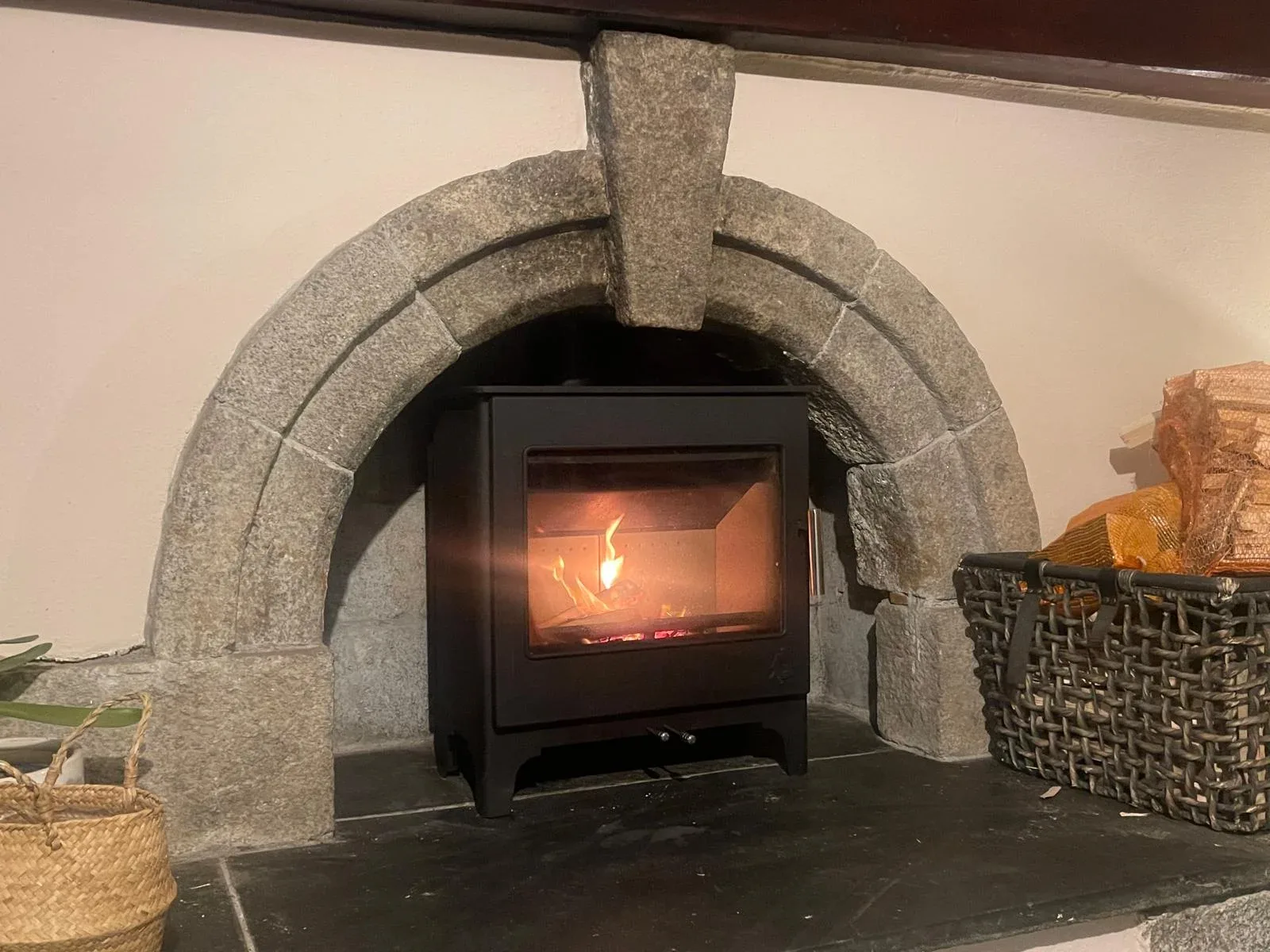
While bio-ethanol fires do produce real heat they are best considered as supplemental heating rather than primary systems. Heat output typically ranges between 2 and 4 kilowatts depending on the appliance.
In well-insulated rooms this can provide noticeable warmth. In larger granite properties the fire enhances comfort and ambience rather than replacing central heating.
Understanding these limitations helps ensure homeowners choose a solution that meets both practical and aesthetic needs.
A common misconception is that no chimney fires require no ventilation. While bio-ethanol fires do not need flues they do require adequate airflow.
Certified appliances comply with BS EN 16647:2015 which governs fuel consumption room size and ventilation requirements. This ensures safe operation and protects indoor air quality.
Professional advice ensures the chosen fire is suitable for the room size and building type while remaining compliant with safety standards.
Although no chimney fires minimise structural changes listed building consent may still be required depending on installation type and location.
Professional installers work with homeowners to assess planning requirements and provide technical information where needed. Choosing a fire that avoids drilling, cutting or permanent fixing often simplifies approval.
Early consultation helps avoid delays and ensures compliance with conservation guidelines.
No chimney fires work particularly well in:
This flexibility allows listed buildings to enjoy modern comfort without compromising heritage value.
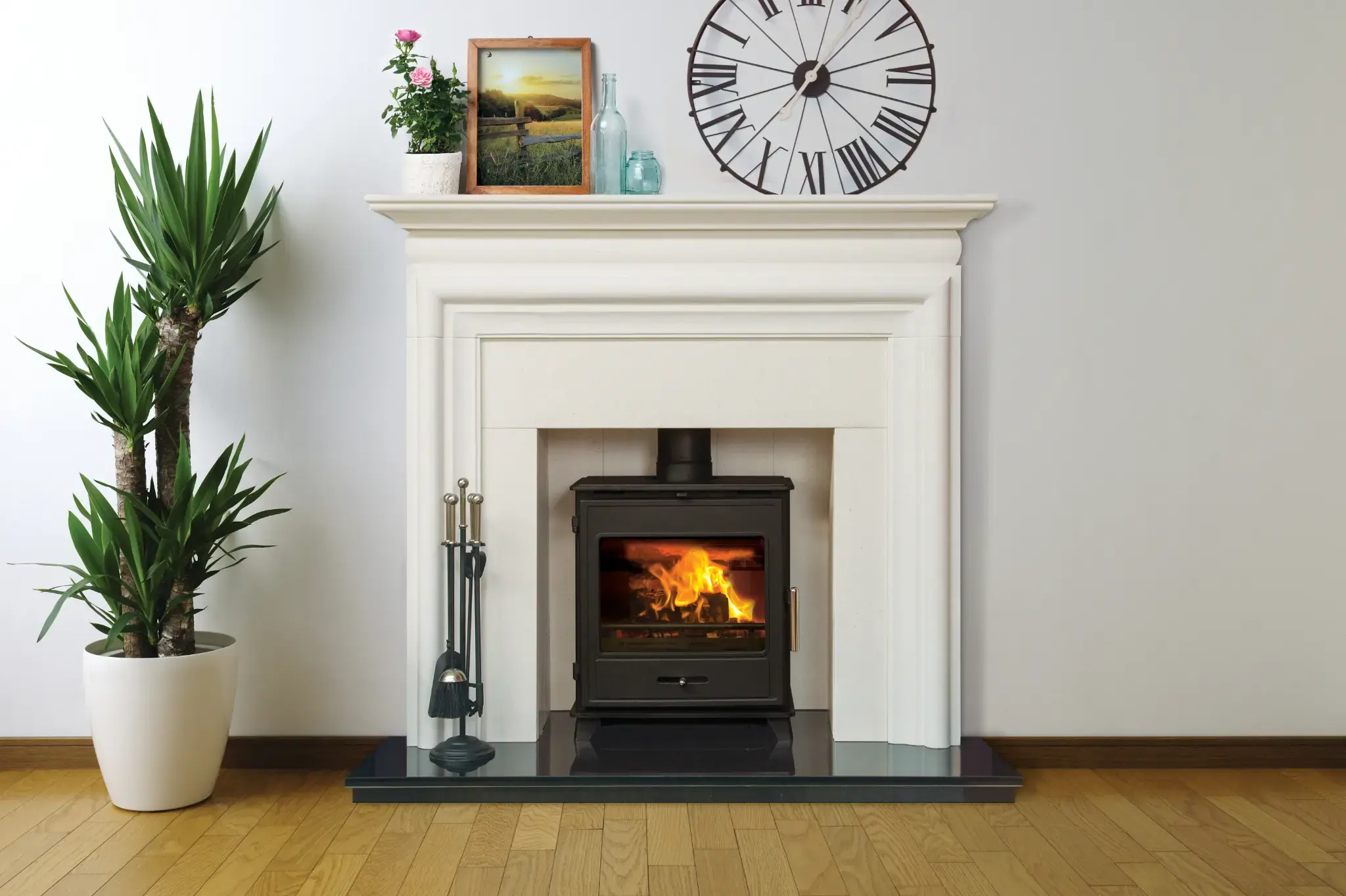
Even without a chimney professional installation remains essential. Correct placement ventilation assessment and fuel handling ensure safe reliable operation.
Experienced installers understand the balance between modern heating solutions and heritage protection. This ensures installations meet safety standards while respecting the building’s historic fabric.
For Cornwall homeowners this expertise is critical given the county’s concentration of listed and protected properties.
No chimney fires offer listed building owners in Cornwall a rare combination of real flame warmth, modern design and minimal disruption. They provide an opportunity to enhance comfort without risking planning issues or damaging historic features.
For homeowners seeking a sensitive heating solution that aligns with conservation requirements, no chimney fires present a practical future-ready option tailored to Cornwall’s unique architectural heritage.
Ready to get started? Fill in the form below and we’ll be in touch within 24 hours.