
Installing a stove in coastal locations such as St Ives and across West Cornwall requires specialist knowledge that goes beyond standard installations. Salt-laden air, high humidity exposed elevations and granite construction all place additional demands on appliances flue systems and installation methods. Without proper planning coastal conditions can significantly shorten the lifespan of stoves and flues. Professional coastal stove installation ensures reliable performance, long-term durability and full compliance with modern safety and clean air standards while preserving the character of Cornwall’s most iconic coastal homes.
West Cornwall experiences some of the harshest environmental conditions in the UK. Constant exposure to Atlantic winds, salt spray and high moisture levels affects both external and internal components of heating systems.
Metal components are particularly vulnerable to corrosion when standard materials are used. Moisture ingress can also affect combustion efficiency, fuel performance and fuel storage.
In areas such as St Ives Penzance Mousehole and surrounding coastal villages these factors must be accounted for from the earliest planning stage of any stove installation.
Not all stoves are suitable for coastal environments. Appliance selection plays a crucial role in long-term reliability.
Pellet stoves are often well suited to coastal homes due to sealed combustion automated operation and controlled airflow. Their enclosed systems reduce exposure to corrosive air and limit indoor air quality issues.
Modern Ecodesign wood burners can also perform well when paired with appropriate flue materials and correct maintenance schedules. Professional advice ensures the chosen stove matches both environmental conditions and lifestyle requirements.
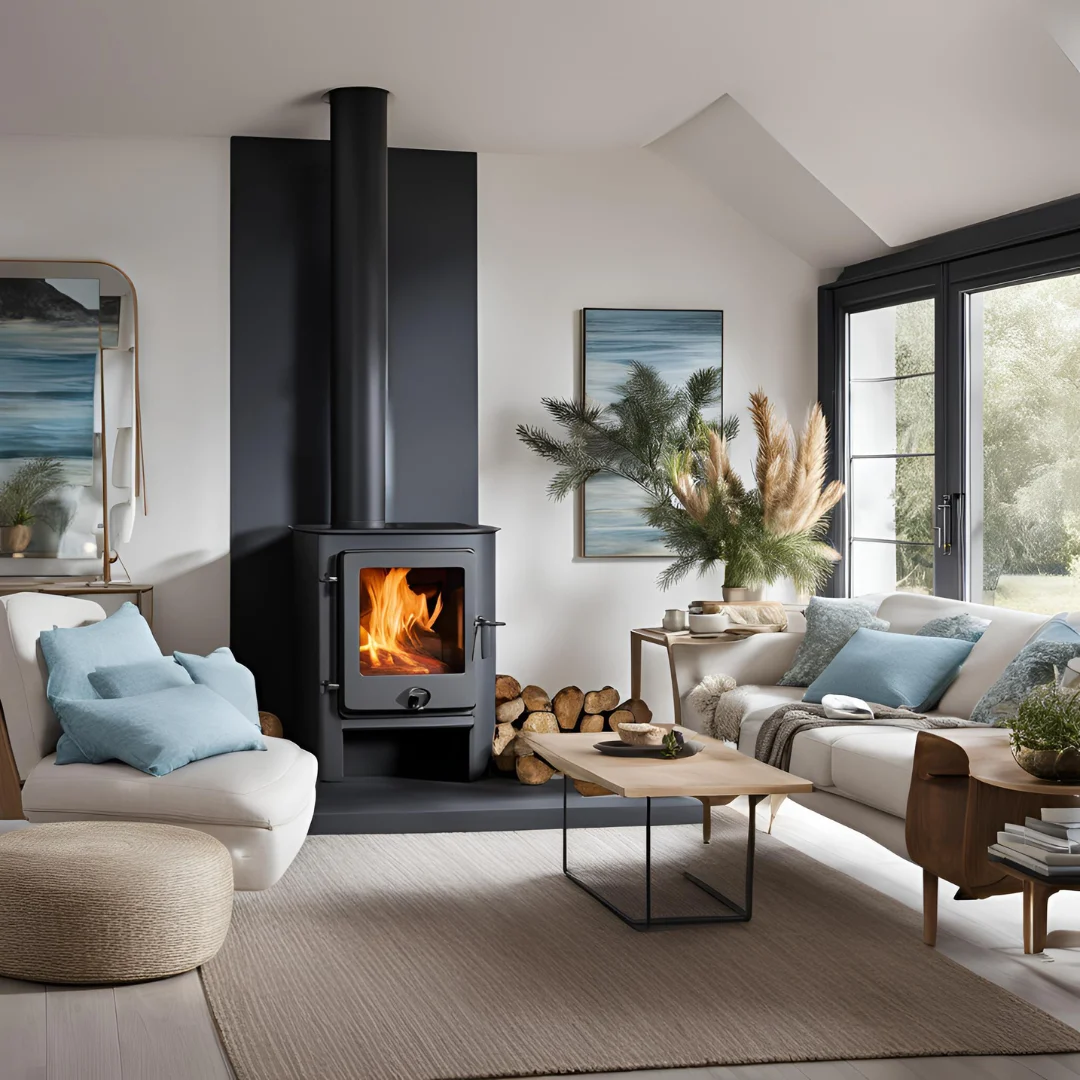
Flue selection is one of the most critical aspects of coastal stove installation. Standard flue materials may corrode prematurely when exposed to salt-heavy air.
In coastal areas corrosion-resistant stainless steel grades are recommended for external twin wall flue systems. These materials are specifically designed to withstand maritime environments and extend system lifespan.
Professional installers assess exposure levels based on proximity to the sea elevation and prevailing winds before specifying flue materials. This ensures long-term safety and performance.
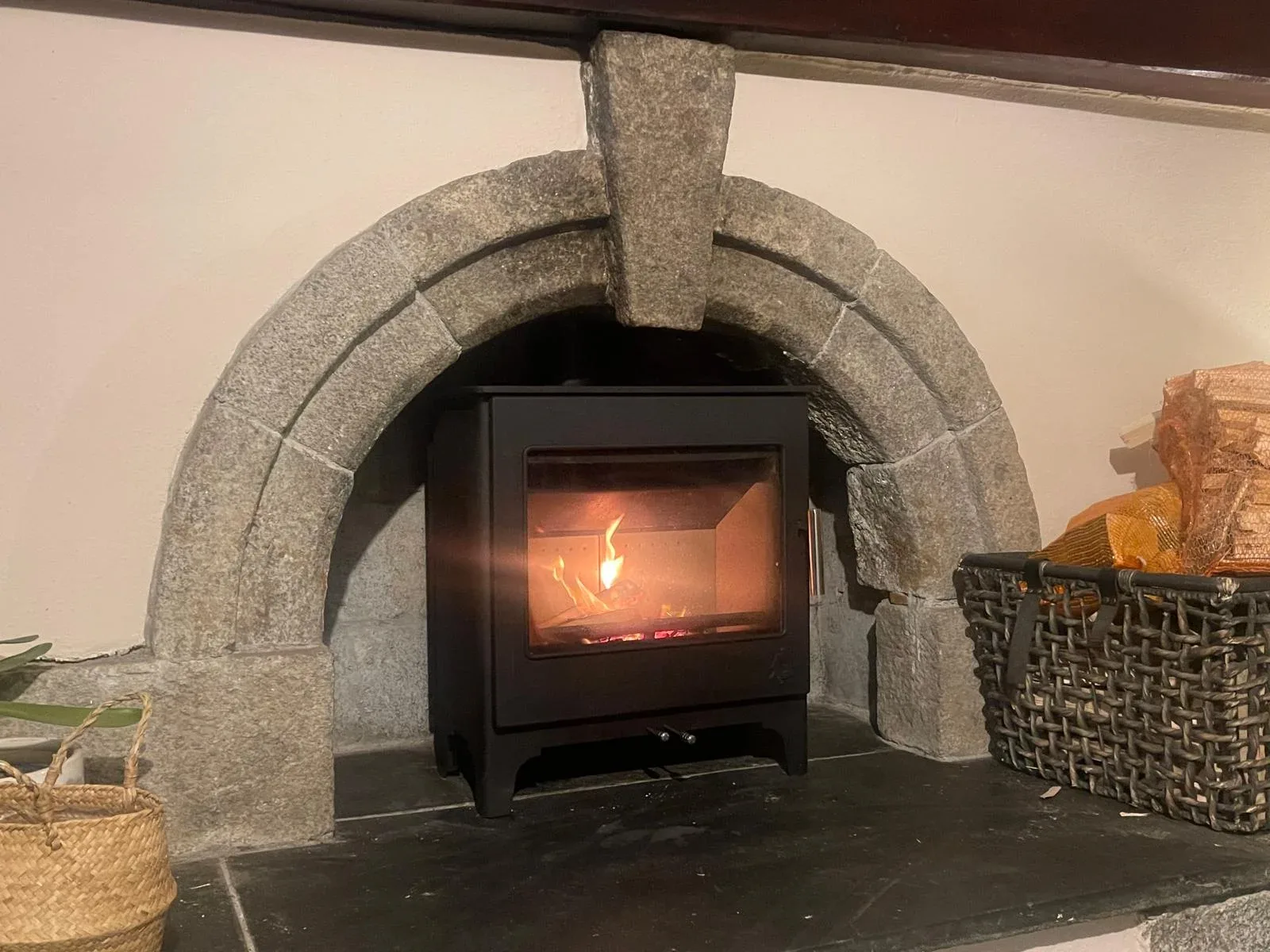
All installs by qualified HETAS-registered engineers across Cornwall & Devon.
Fully managed end-to-end project delivery, from survey to final commissioning.
Visit our Redruth showroom, TR16 5FG, by appointment or walk-in.
Free, no-obligation technical site surveys with our HETAS-registered surveyors.
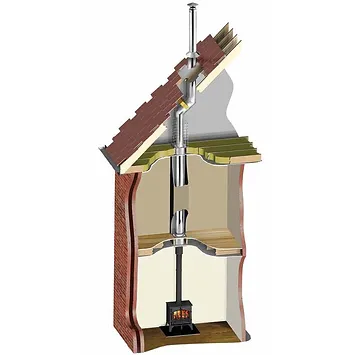
Many coastal homes in West Cornwall lack suitable internal chimneys or have chimneys that are no longer serviceable. External twin wall flue systems offer a practical solution.
These systems allow flues to be routed externally with minimal internal disruption. Black powder-coated finishes help flues blend with stone walls, slate roofs and coastal architecture.
Careful positioning reduces visual impact while ensuring safe clearances and efficient exhaust flow.

Granite construction is a defining feature of coastal homes in West Cornwall. Walls are often thick load-bearing and irregular which complicates flue routing.
Diamond core drilling is used to create precise openings without compromising structural integrity. This method ensures clean accurate penetrations through granite while minimising vibration and damage.
Professional planning ensures flue routes are safe compliant and sympathetic to the building’s character.
Coastal humidity affects fuel storage and combustion. Logs stored outdoors or in poorly ventilated spaces can absorb moisture leading to inefficient burning and increased emissions.
Pellet fuel must be stored in dry sealed containers to prevent moisture absorption. Professional installers advise on suitable storage solutions for coastal environments.
Managing moisture is essential for maintaining efficiency, protecting components and ensuring clean combustion.
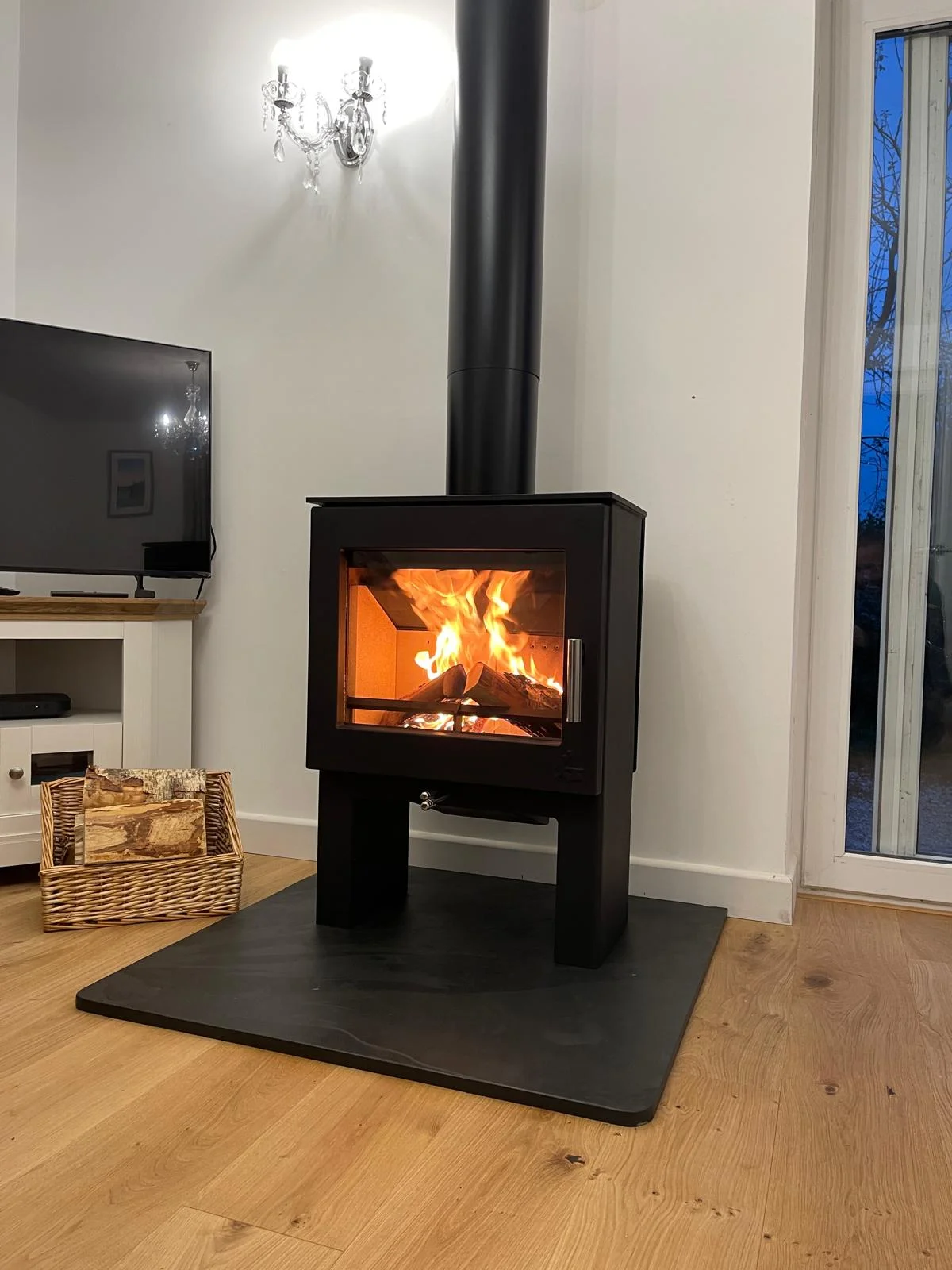
Air quality is an increasing concern in coastal towns where housing density and weather conditions can trap pollutants.
Modern pellet stoves and Ecodesign compliant wood burners produce significantly lower emissions than older appliances. Pellet stoves in particular offer sealed combustion which reduces indoor and outdoor particulate release.
Choosing compliant appliances helps protect local air quality while future-proofing installations against evolving regulations.
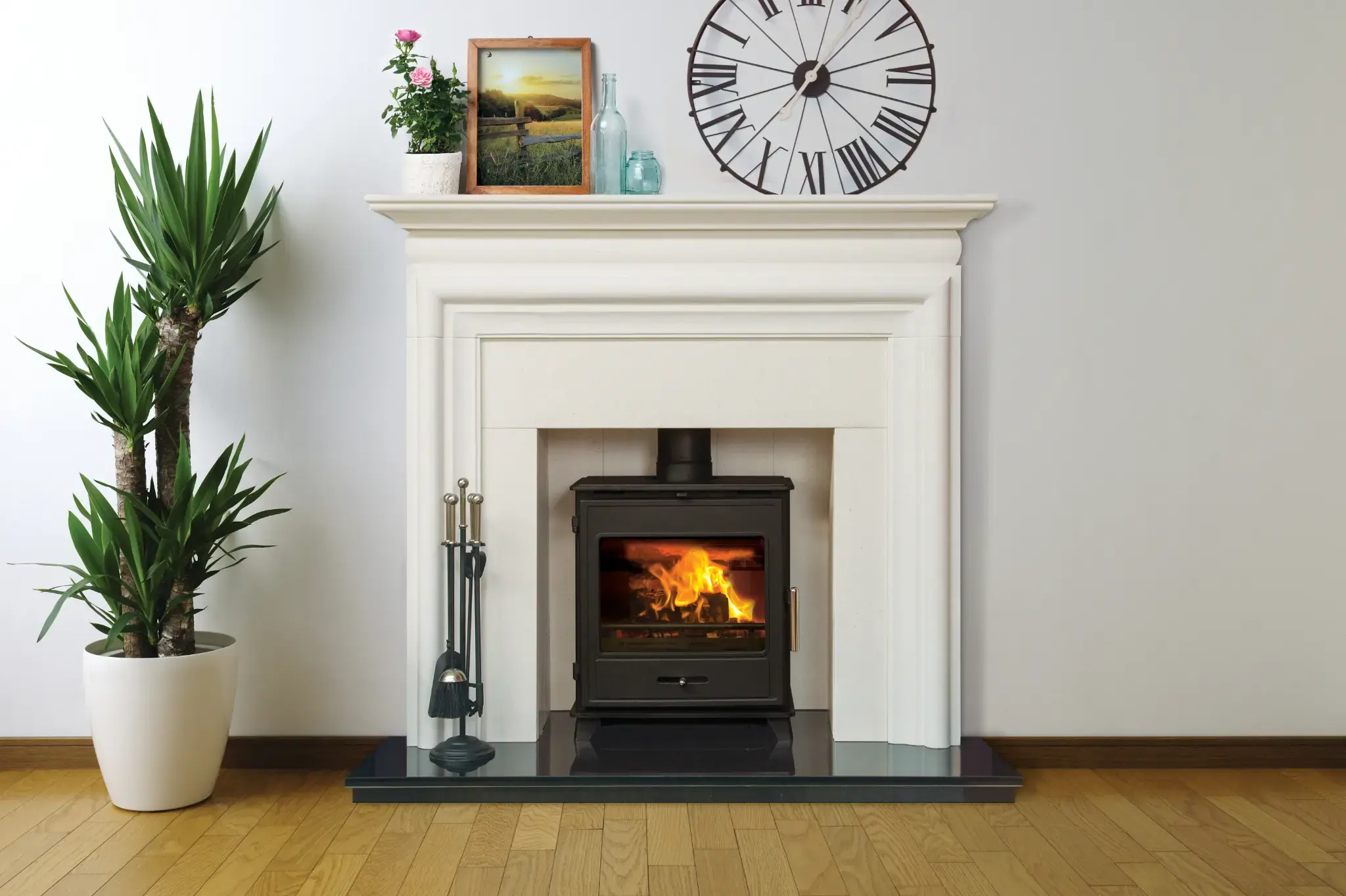
St Ives and surrounding coastal towns often fall within conservation areas with strict planning controls. External alterations including flues may require approval.
Professional installers understand local planning expectations and design flue routes to minimise visual impact. Early consultation helps avoid delays and ensures installations respect local character.
A well-designed installation enhances comfort without detracting from the property’s appearance.
Coastal stove installations benefit from regular maintenance to address environmental exposure. Annual servicing checks flue condition seals sensors and corrosion-prone components.
Proactive maintenance extends system lifespan and ensures continued safe operation. In coastal locations this is particularly important due to accelerated wear.
Professional servicing schedules provide peace of mind and consistent performance year after year.
Ready to get started? Fill in the form below and we’ll be in touch within 24 hours.