
Coastal homes across Cornwall face environmental conditions that place far greater demands on flue systems than inland properties. Salt-laden air, high humidity, strong winds and constant exposure to the elements can significantly reduce the lifespan of incorrectly specified flues. Choosing the right flue materials is not simply a technical detail. It is essential for safety performance and long-term reliability. For homeowners installing wood burners pellet stoves or modern fires in coastal locations careful flue material selection ensures the system remains compliant, durable and effective in one of the UK’s most challenging environments.
Coastal air contains salt particles carried inland by wind. These particles settle on exposed metal surfaces and accelerate corrosion through a process known as salt-induced oxidation.
High humidity further increases corrosion risk by allowing moisture to linger on surfaces. External flues are particularly vulnerable as they are exposed year-round to rain wind and airborne salt.
Without suitable materials corrosion can begin quickly leading to weakened joints, reduced flue integrity and potential safety risks.
Flues are not simply exhaust pipes. They are critical safety components that remove combustion gases safely from the home.
Corroded flues can develop pinhole cracks or failed joints allowing gases to escape. This compromises draft efficiency and poses serious safety concerns.
Choosing materials designed for coastal exposure ensures the flue continues to perform its safety role throughout its service life.
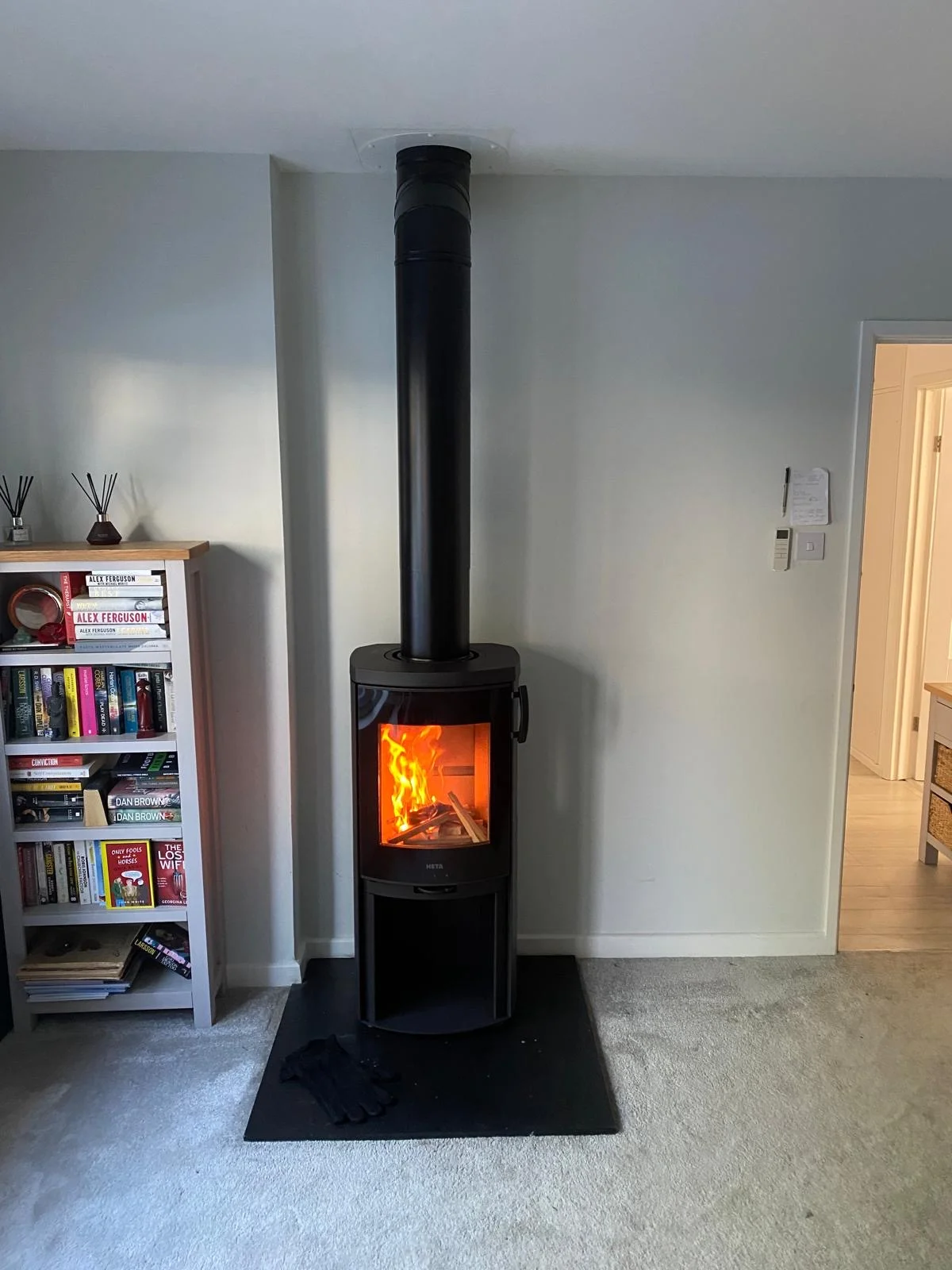
Not all stainless steel offers the same level of corrosion resistance. In coastal environments material grade selection is critical.
Grade 316 stainless steel provides improved resistance to corrosion compared to standard grades. It is commonly used in coastal flue systems due to its durability in salt-heavy conditions.
In highly exposed locations such as clifftop properties or homes close to the shoreline higher-grade stainless steel may be specified for additional protection.
Professional scoping determines which grade is appropriate based on exposure levels and installation type.
All installs by qualified HETAS-registered engineers across Cornwall & Devon.
Fully managed end-to-end project delivery, from survey to final commissioning.
Visit our Redruth showroom, TR16 5FG, by appointment or walk-in.
Free, no-obligation technical site surveys with our HETAS-registered surveyors.
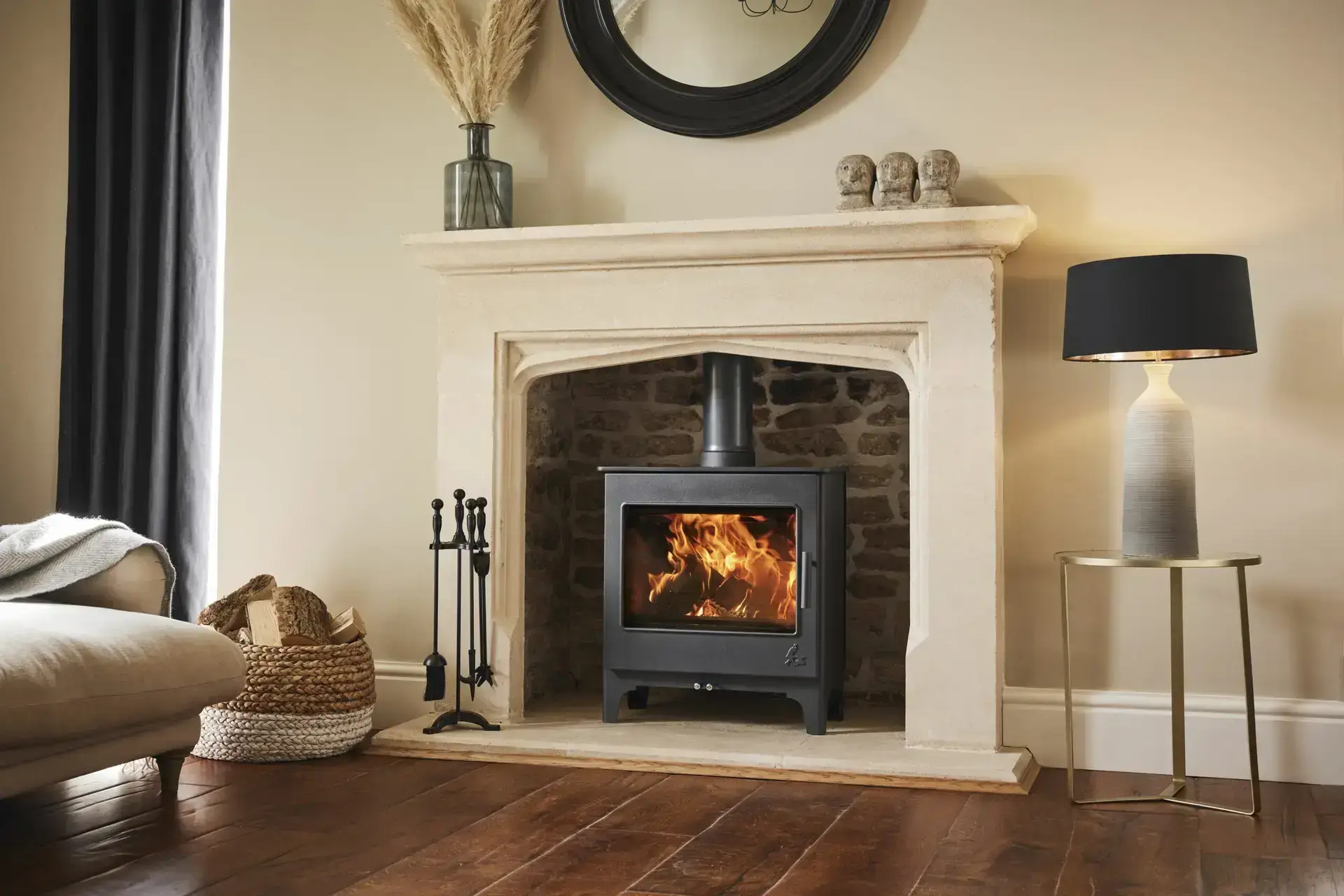
External twin wall flue systems are often the preferred solution for coastal properties where internal chimneys are unavailable or unsuitable.
These systems consist of an insulated inner flue and protective outer casing. The insulation maintains flue gas temperature while reducing condensation risk.
For coastal homes twin wall flues must be manufactured from corrosion-resistant materials to withstand prolonged exposure. Powder-coated finishes can provide additional protection and help flues blend with coastal architecture.
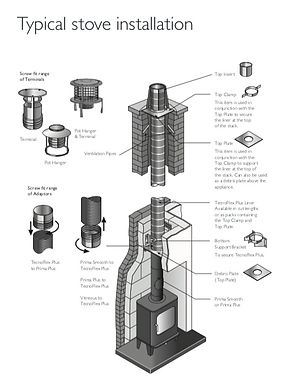
Internal flues are generally better protected from environmental exposure but may still be affected by humidity and condensation.
External flues experience the harshest conditions and therefore require the highest level of material protection. Incorrect specification for external use is one of the most common causes of premature flue failure in coastal areas.
Professional installers consider flue route length exposure direction prevailing winds and building layout when specifying materials.
Pellet stoves operate with mechanically assisted exhaust systems and lower flue gas temperatures compared to wood burners.
Lower temperatures increase condensation risk particularly in coastal humidity. This makes corrosion resistance and insulation even more important.
Flues for pellet stoves must be correctly specified to handle both moisture and exhaust characteristics to prevent internal corrosion and performance issues.
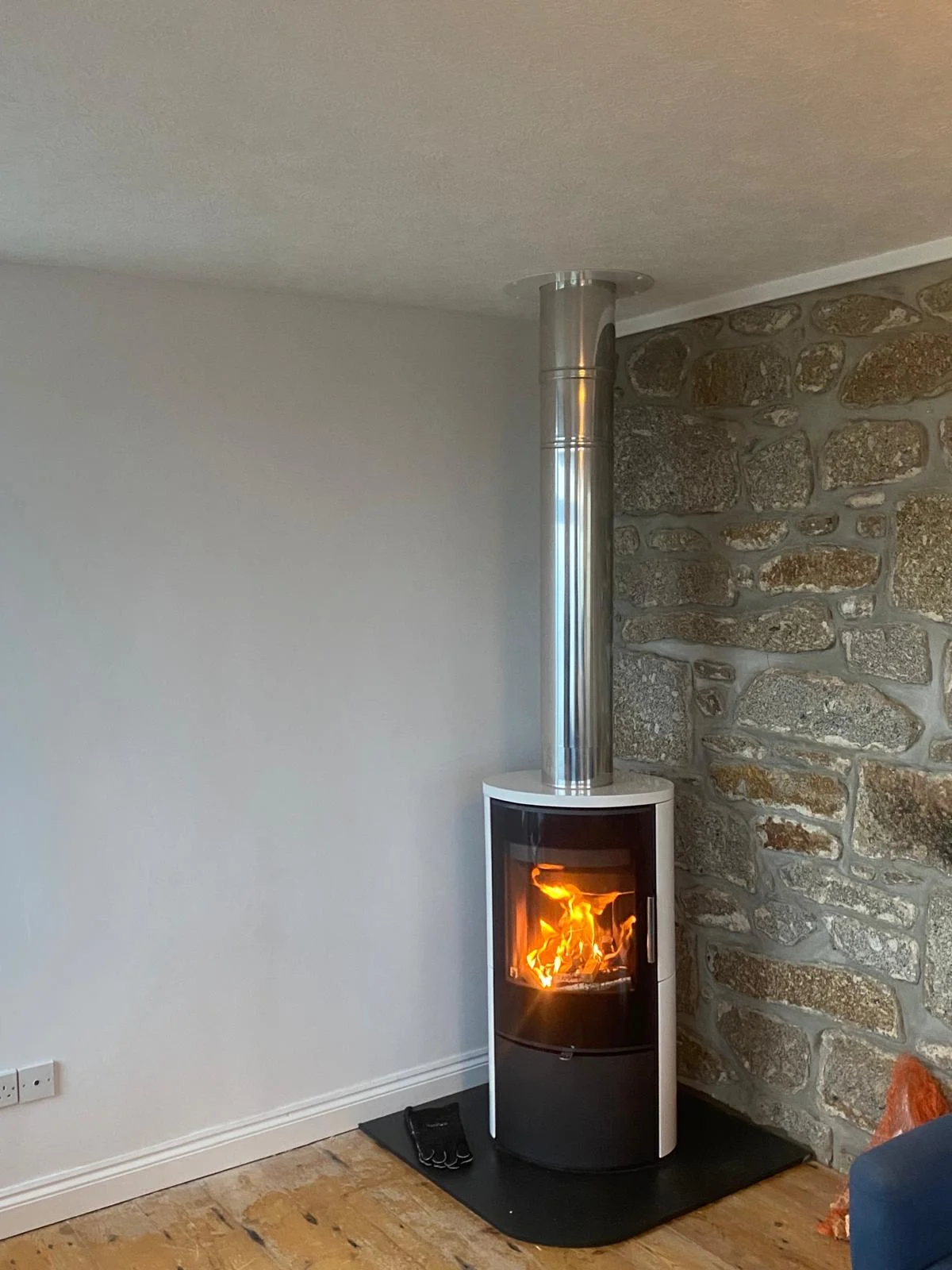
Condensation forms when warm exhaust gases meet cooler flue surfaces. In coastal homes this effect is amplified by cool damp air.
Insulated twin wall flues reduce condensation by maintaining stable internal temperatures. Correct material selection ensures condensate does not accelerate corrosion.
Managing condensation is essential for maintaining flue integrity and appliance efficiency.
Coastal properties are often exposed to strong and unpredictable winds. This places physical stress on external flue systems.
Flue materials must be strong enough to maintain structural stability while remaining corrosion resistant. Fixing brackets and supports must also be specified for coastal use.
Professional installation ensures flues are securely supported and positioned to withstand wind loading without movement or fatigue.
Coastal homes often fall within conservation areas where appearance matters. Flue materials and finishes must balance durability with visual suitability.
Black powder-coated flues are commonly used to reduce visual impact while providing additional surface protection. Correct placement helps flues blend into façades, rooflines or architectural features.
Early planning ensures both technical and aesthetic requirements are met.
Ready to get started? Fill in the form below and we’ll be in touch within 24 hours.